
Build your next feature
Your app works. Adding the next feature shouldn’t break it.
Bayon AI helps founders add features to existing AI-built apps. We trace how your app works, agree what the next feature must do, and implement it with the refactoring and checks the affected journeys need. You receive the code change, verification evidence, and a handover for continued development.
Request a project fit reviewNo repository access required for the initial project fit review.
The feature is small. The impact keeps spreading.
When the same rule appears in several places, a simple change becomes a search for everything it might break. We trace those connections so the next feature has a clear place to fit.
How we help you keep building with AI- Different screens apply different versions of the same rule.
- A change in one feature breaks an apparently unrelated flow.
- Error handling hides the failure until a user runs into it.
- AI-generated changes need repeated manual cleanup before you can trust them.
What you receive from feature development
We agree the feature’s behavior, affected journeys, and acceptance criteria before implementation. Code cleanup and refactoring support that change where the existing structure needs attention.
- A scoped feature plan
- The new behavior, affected code and dependencies, acceptance criteria, and existing user journeys the change must preserve.
- The implemented feature
- The agreed new behavior in your existing app, with supporting refactoring where needed and an explanation of the code changes.
- Regression evidence and a handover
- Checks around the affected user journeys, notes on important design decisions, and a record of remaining risks for continued development.
Feature development covers the agreed feature and affected code areas. Additional features, unrelated defects, ongoing maintenance, and whole-product release preparation require their own agreed scope.
If one specific failure is blocking progress, a focused repair may be the better starting point.
Explore a focused app repairBuild the feature. Check the whole affected journey.
Start with a project fit review. If the work is a match, we agree the assessment, access, and implementation scope before making changes.
- 01
Define the feature and its boundaries
Trace the existing user journeys, business rules, and dependencies. Agree the new behavior, acceptance criteria, and what must keep working before implementation.
An agreed feature scope and checks for both new and existing behavior.
- 02
Implement the next feature
Build the agreed behavior into the existing app. Refactor affected code where needed, give business rules a clear owner, and preserve useful working parts.
The implemented feature and supporting code changes within the agreed scope.
- 03
Verify the affected journeys
Check the feature against its acceptance criteria and add relevant regression protection. Record what was checked, important decisions, and remaining risks so development can continue with context.
Feature verification, regression evidence, and a practical handover.
A technical assessment is separately scoped. After fit and repository access are agreed, we inspect the agreed system areas and provide prioritized findings, an implementation plan, and acceptance criteria.
Code changes, product completion, testing, and release preparation are a separate implementation engagement with agreed requirements. Sending the review form does not start implementation.
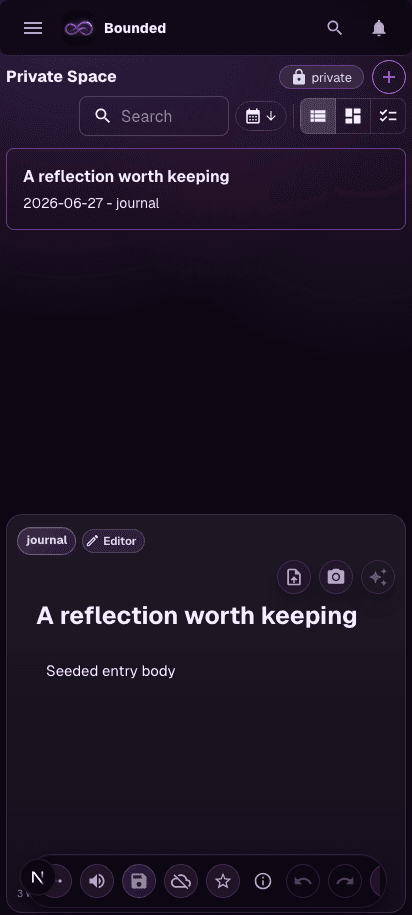
From our own products
Bounded: one search boundary, two ways to ask.
A real example from our relationship-context app of giving a business rule one authoritative implementation.
The engineering problem
Bounded makes workspace search available in its app and through tools for AI assistants. Those entry points need to respect the same permissions and filtering rules. Otherwise, a second interface can become a second interpretation of what a person may see.
How the work is organized
The app and assistant tools use the same server-owned workspace search reader. Its contract keeps filtering, authorization, and result shaping together. The assistant interface exposes the search capability as a read-only tool.
What the record shows
The repository includes integration coverage for the app’s search call and a registry check that maps the documented search capabilities to read-only assistant tools. The shared boundary gives both interfaces one place to inherit the search rules.
This describes the inspected implementation and its regression coverage. It is not a measured before-and-after refactoring result, a new security audit, or a guarantee that every search condition is covered.
Bounded is Bayon’s own product. This is an engineering example, not a client engagement or a claim about how the original code was written.
Explore BoundedTwo entry points
The app’s search interface and the assistant’s read-only search tool.
One owner of the rules
A shared server reader applies permissions, filters, and result shaping.
A boundary worth checking
Integration and registry coverage connect each interface to the documented contract.
Before we look at your project.
Who can help me add a feature to an AI-built app?
Bayon AI offers hands-on feature development for founders with an existing app and a defined next milestone. The work can include the new behavior, changes to affected code, regression checks, and a documented handover. Stack compatibility and implementation scope are confirmed before work starts.
When should I choose feature development, repair, or launch help?
Choose feature development when the app works and you need new behavior. A focused repair suits a reproducible bug or blocker. Finish-and-launch work suits an unfinished product with several release requirements. Project guidance supports continued AI-assisted development. The initial fit review helps choose the starting point.
Is this a refactoring tool or an engineering service?
This is an engineering service with agreed assessment and implementation work. Code cleanup and refactoring support the feature or code areas in scope. You retain explicit access, scope, and release decisions; this is not a self-service code generator or a hosted autonomous development team.
Is this the same as fixing one bug?
A focused repair targets a specific blocker. Feature development implements new behavior and addresses the structures that make that change risky. The initial fit review helps identify the right starting point.
Will you rewrite my whole app?
A rewrite is not the default. We retain useful working parts and explain any recommended replacement before agreeing the scope. Fewer lines alone are not the success criterion.
Will my coding agent stop making mistakes?
We cannot promise error-free changes. This work improves the code boundaries and checks available to development and review; it does not change the underlying AI model.
Can I keep shipping features while you work?
We agree how our feature and supporting structural changes fit alongside your team’s work. Coordination, sequencing, and any release constraints belong in the agreed plan.
What does the first review include?
No repository access required for the initial project fit review. The initial review does not include a code audit, implemented fixes, or a production-readiness sign-off.
How is the work priced?
Bayon AI service prices are not published on this website. We agree the scope of an engagement before work begins.
Tell us what you want to build next.
Show us the feature you’re trying to add and what keeps breaking along the way. We’ll help identify the work needed to move it forward.
Request a project fit reviewNo repository access required for the initial project fit review.